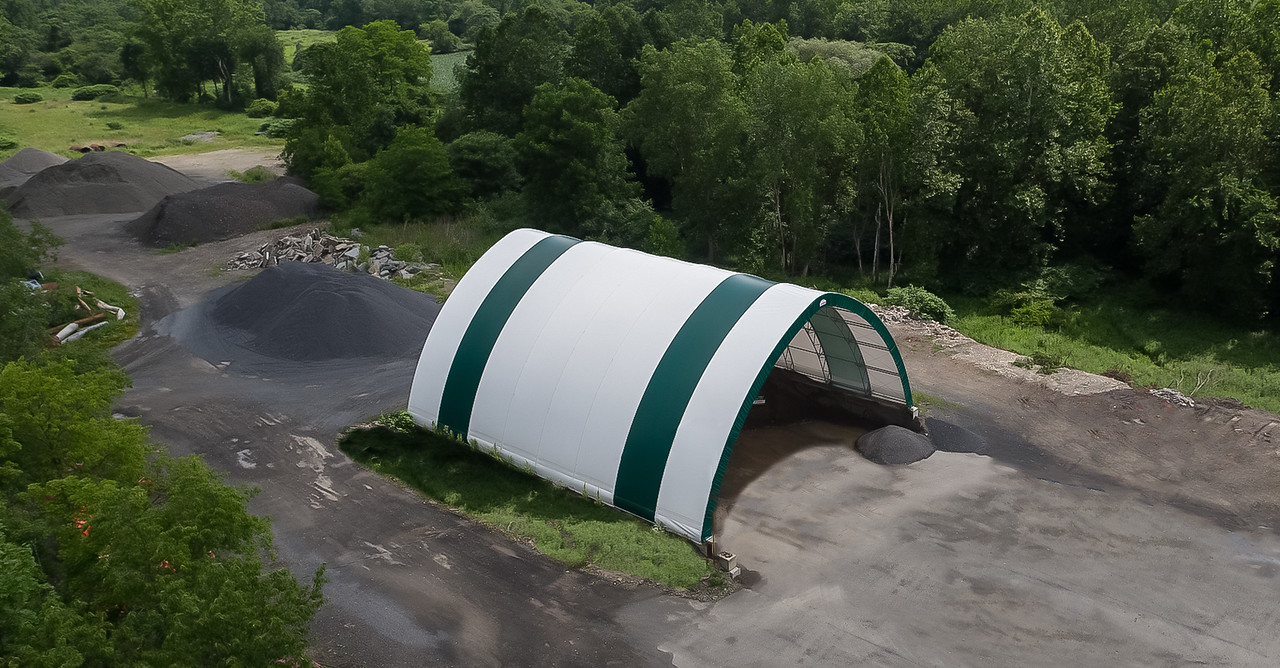
What’s the art and science behind fabric structures to make sure they last for years and years? You’ve seen them at airports, industrial sites, or warehousing facilities. They make for great office buildings and stunning shopping mall terraces too. But what’s the secret that guarantees the strongest, most reliable fabric building?
Here are some industry best practices that the best fabric building experts incorporate in the delivery of superior-quality fabric buildings:
The best fabric building professionals employ 3D nonlinear finite element site-analysis (FEA) to predict the performance of a building subject to specific snow loading and weight on the fabric cover, amongst other environmental factors. The application of 3D FEA simulates a structure’s behavior on exposure to strong winds, fatigue, thermal dynamics, rainfall, seismic activity, or snow.
The analysis must be site-specific to address environmental factors as well as end-user requirements. The best engineers utilize accurate, predictive structural analytics, which gives them the confidence to build safe and reliable fabric structures, and entails the following:
Open web trusses make for robust and stable frameworks for putting up the best fabric building. Engineers prefer them due to the many perks they offer, including the ability to customize a design to particular loadings, rather than just the standard joist specifications.
Open web trusses support various design options, including curved top chords and different depths of truss bearing seats. It’s also possible for engineers to integrate steel trusses into a fabric structure’s lateral force protection mechanisms.
Another great benefit of open web trusses is that they usually last longer than other options, such as bent web trusses, when zinc coating is applied. The optimal engineering welds leave sufficient room for the hot-dip galvanizing solution to penetrate and coat the steel framework, inside and out, providing full corrosion protection. Crucial open web truss design considerations include:
The best fabric building companies apply hot-dip galvanized (HDG) steel frameworks to build hard-wearing fabric structures. HDG steel has the following advantages:
A typical hot-dip galvanizing process involves dipping steel in a bath of molten zinc. The procedure has to be thorough enough to deliver 100% corrosion protection. As such, the best assemblers ensure the entire framing material comes into contact with the HDG liquid. Usually, the metallurgical reaction takes place at 815-850 F (435-455 C).
The steel frame comes out of the galvanizing process stronger and more impact-resistant due to its several layers of zinc-iron alloys which result from zinc reacting with the iron in steel. The outermost coat is 100% zinc, and it does not rust or disintegrate readily.
Whether you’re looking to build a sports facility, industrial warehouse, or chemical storage facility, you can count on the versatility, durability, and tensile strength of fabric structures. However, the design, engineering, and construction of fabric buildings must follow critical best practices to guarantee their long-term reliability and safety.