The Challenges of Bulk Fertilizer Handling and Storing
Handling fertilizers involves various types of equipment designed to facilitate efficient and safe transportation, storage, and application. Proper maintenance and adherence to safety guidelines is crucial for ensuring the longevity and effectiveness of the equipment. The equipment used in handling fertilizers can vary depending on the type of fertilizer, the scale of operations, and the specific needs of the agricultural setting. Thus, fertilizer storage becomes complicated.
Efficient Fertilizer Storage
Efficient fertilizer handling requires a combination of these equipment types, adapted to the specific needs and conditions of the agricultural operation:
Conveyors and Elevators: Belt conveyors and bucket elevators are commonly used to move bulk fertilizers within manufacturing facilities, storage warehouses, or during loading and unloading processes.
Bulk Storage Tanks and Silos: Silos and tanks are used to store large quantities of bulk liquid or granular fertilizers with appropriate coatings and materials used to store liquid fertilizers, such as ammonia or liquid nitrogen, in bulk quantities. Further, mobile storage units, such as fertilizer trailers or portable bins, allow for on-site storage and handling, reducing the need for multiple transfers.
Fertilizer Blending Equipment: It is common practice to mix different fertilizer components to create customized blends. Blenders, mixers, and augers are used to combine various fertilizer ingredients to achieve a specific nutrient composition tailored to the needs of a particular crop or soil.
Weighing Systems: Weighing systems, such as scales and load cells, are used to accurately measure and dispense fertilizers. They are integrated into various points of the fertilizer handling process to ensure accurate measurement and dispensing of fertilizers.
Forklifts and Pallet Trucks: Forklifts, pallet jacks, or hand trucks are used to move pallets of bagged fertilizers within storage facilities or during loading and unloading operations.
Packaging Equipment: Bagging machines and packaging lines are used to pack bulk fertilizers into smaller, consumer-friendly units using bags of various sizes for retail distribution or ease of handling.
Fertilizer Spreaders: Distributing granular or powder fertilizers evenly over a field is critical in fertilizer application. Broadcast spreaders and drop spreaders are used for applying fertilizers in agricultural settings. They can be mounted on tractors or operated as standalone equipment. Liquid fertilizer applicators, including sprayers and injection systems, are used to apply liquid fertilizers directly to crops or soil in a controlled manner. These can be mounted on tractors or other agricultural machinery.
Application Control Systems: Advanced control systems on application equipment, including GPS-guided systems and variable rate technology, regulate the rate of fertilizer application. They enable precise and controlled application of fertilizers based on specific field requirements.
Personal Protective Equipment (PPE) and Cleaning Equipment: Personal protective equipment, including gloves, safety glasses, respiratory protection, and other gear, is essential to protect workers from potential hazards associated with fertilizer handling. Cleaning systems, such as air compressors and washdown stations, are used to prevent cross-contamination and maintain equipment hygiene by preventing the buildup of residues that can affect the quality of fertilizer.
Fertilizer Storage Challenges
While fertilizers are essential for enhancing soil fertility and promoting plant growth, their transportation and storage require careful consideration due to safety, environmental, and economic factors. Thus, moving and storing fertilizer poses challenges due to the nature of these agricultural inputs. Here’s an outline of specific challenges associated with moving and storing fertilizers:
Chemical Composition and Reactivity: Different types of fertilizers have varying chemical compositions, and some can be reactive or corrosive. Ammonium-based fertilizers, for example, can be prone to forming explosive compounds under certain conditions. The challenge is to ensure compatibility during transportation and storage to prevent unintended reactions or hazards.
Transportation Logistics: Fertilizers are often transported over long distances from manufacturing facilities to distribution centers and farms. Selecting appropriate transportation modes and ensuring timely delivery while considering the bulk and weight of fertilizers can oftentimes be a challenge. Further, stay abreast of and adhering to local, national, and international regulations governing the transportation and storage of fertilizers is critical.
Packaging and Personal Safety: Fertilizers can pose safety risks to workers, especially if mishandled, stored improperly, or not packaged securely, and is subject to various regulations and safety standards. Fertilizers, therefore, need to be packaged securely to prevent spillage, contamination, and degradation during transportation. Choosing durable and leak-proof packaging materials to protect the product, environment, and workers is critical. Furthermore, implementing safety protocols, training personnel, and using appropriate equipment to reduce the risk of accidents and injuries is good practice.
Environmental Impact: Fertilizer run-off can contribute to water pollution and harm ecosystems. Thus, implementing best practices to minimize environmental impact during transportation and storage, such as preventing spills and runoff, is crucial.
Storage Facilities: Fertilizers must be stored in appropriate facilities that prevent moisture ingress, temperature variations, and contamination. The challenge is addressing infrastructure gaps through investments and collaborations to ensure smooth logistics. In some regions, the lack of adequate transportation infrastructure or storage facilities can hinder the efficient movement and storage of fertilizers. Constructing or maintaining storage facilities with proper ventilation, temperature control, and containment systems to preserve fertilizer quality is critical.
Summary
Addressing these challenges requires a holistic approach that combines technological advancements, regulatory compliance, and best practices to ensure the safe and efficient movement and storage of fertilizers.
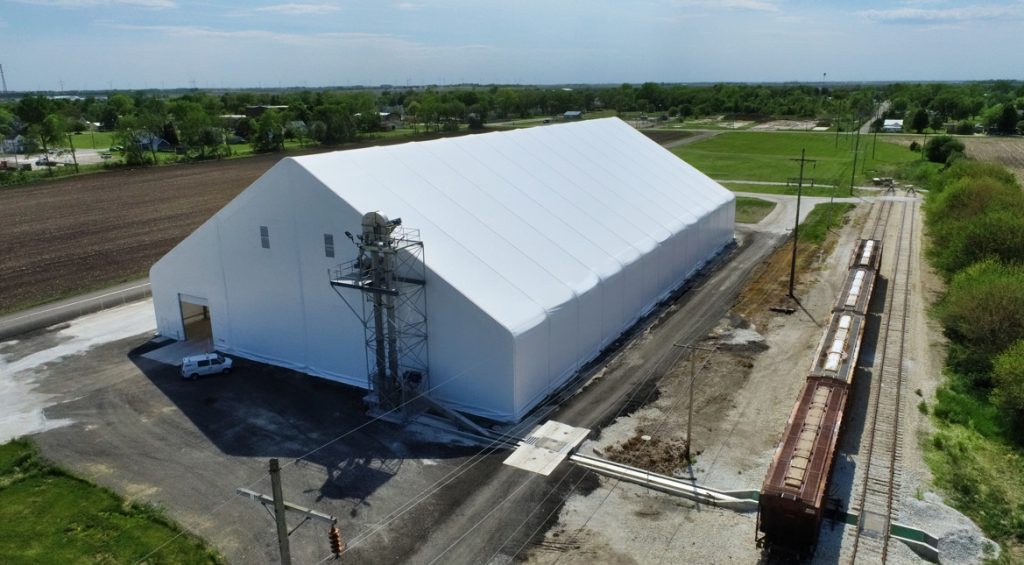
Fabric structures can be advantageous for fertilizer storage and production due to their cost-effectiveness, versatility, and quick construction. These structures, often made with tensioned fabric membranes, provide a flexible and durable solution for various agricultural applications. When considering fabric structures for fertilizer storage and production, it’s essential to work with experienced designers and manufacturers such as Calhoun Super Structure who understand the specific requirements of the agricultural industry. This ensures that the chosen fabric structure meets safety standards, durability expectations, and operational needs. Additionally, compliance with local building codes and regulations should be a priority in the design and construction process.
To learn more about our fertilizer storage solutions, click here.
To read about us in Dry Cargo Magazine, click here.
Ready to Build?
Just before you contact us, check out this helpful infographic that gives you an overview of all the things you should consider!