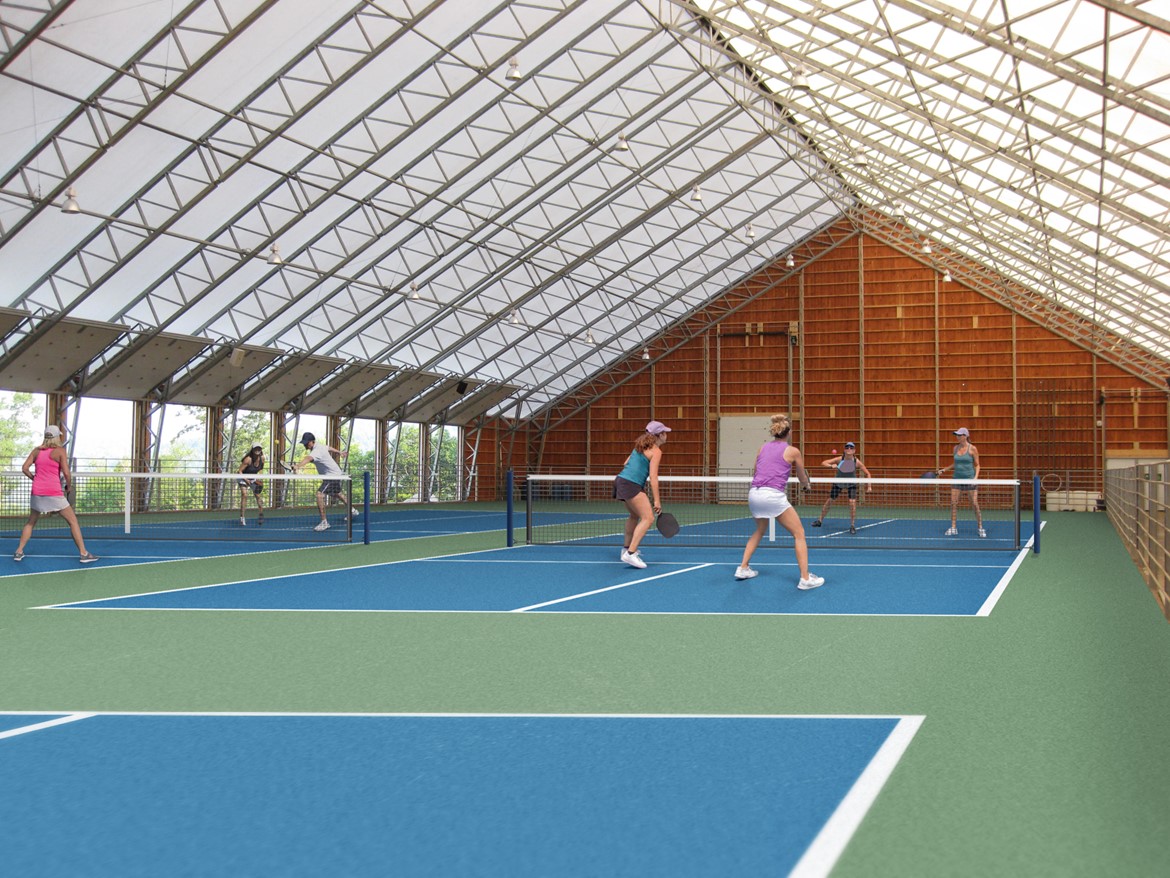
When it comes to creating recreational spaces—think indoor tennis courts, hockey rinks, or multi-use gymnasiums—two standout options are fabric-covered buildings and inflatable domes. Both offer shelter from the elements, but they differ significantly in cost, durability, energy efficiency, and functionality. Here’s how they stack up:
Cost and Installation
- Fabric Structures: Offer highly competitive pricing; on average around $50 per square foot for building kit and installation, with lead times of around 4–5 months
- Inflatable Domes: Slightly higher cost at $56 per square foot and similar lead times
Structural Integrity & Load Capacity
- Fabric Structures: Use hot-dipped galvanized (HDG) steel frames with durable high-density polyethylene (HDPE), or optional PVC fabric, that’s thermally non-conductive and fire-retardant. These can handle harsh weather—up to 150 MPH winds and 300 lb/sq ft snow loads—making them dependable year-round.
- Inflatable Domes: Rely on constant air pressure to maintain their shape. This makes them vulnerable to deflation from power failures, damage, or heavy snowfall, and they don’t support hanging equipment like scoreboards or netting.
Design Flexibility
- Fabric Structures: Offer major flexibility; windows, doors, ventilation systems, even custom cladding like wood or steel. You can also engineer them for varying shapes and sizes.
- Inflatable Domes: More restrictive. Doorways often require air locks, shapes are limited by pressure mechanics, and customization options are minimal.
Maintenance & Repairs
- Fabric Structures: Can be repaired section by section with minimal downtime; replacement of individual panels is relatively simple.
- Inflatable Domes: Repairs are complex, often requiring the dome to be fully deflated, which can lead to long downtime and downtime-sensitive impacts.
Energy Efficiency & Comfort
- Fabric Structures: The semi-translucent fabric allows natural light in, reducing the need for artificial lighting and cutting energy costs. They also provide a thermally regulated environment, contributing to both comfort and ROI.
- Inflatable Domes: Typically rely entirely on artificial lighting and continuous airflow—making them less energy-efficient and potentially less comfortable.
Why Fabric Structures Stand Out
Calhoun Super Structure brings some additional advantages to the table for fabric buildings in recreational use:
- Free-Span Interiors: No interior columns mean more space and flexibility—for spectators, players, events, or equipment setups.
- Natural Light & Climate Control: Their designs maximize daylight and allow seamless integration of HVAC and insulation to meet user and comfort needs.
- Robust Engineering: All buildings are custom engineered using 3D non-linear finite element analysis (FEA) to ensure they’re built for site-specific loads and conditions.
- Durability & Warranty: Structures are built with high-quality steel frames and fabrics, and Calhoun backs them with industry-leading warranties.
The Bottom Line
While inflatable domes may be tempting for short-term, temporary recreation needs, fabric structures consistently deliver a more robust, energy-efficient, customizable, and low-maintenance solution.
For community centers, sports facilities, or year-round recreational venues, fabric structures—especially those engineered by Calhoun Super Structure—offer unmatched longevity and value. They give you the room to play, endure, and adapt.