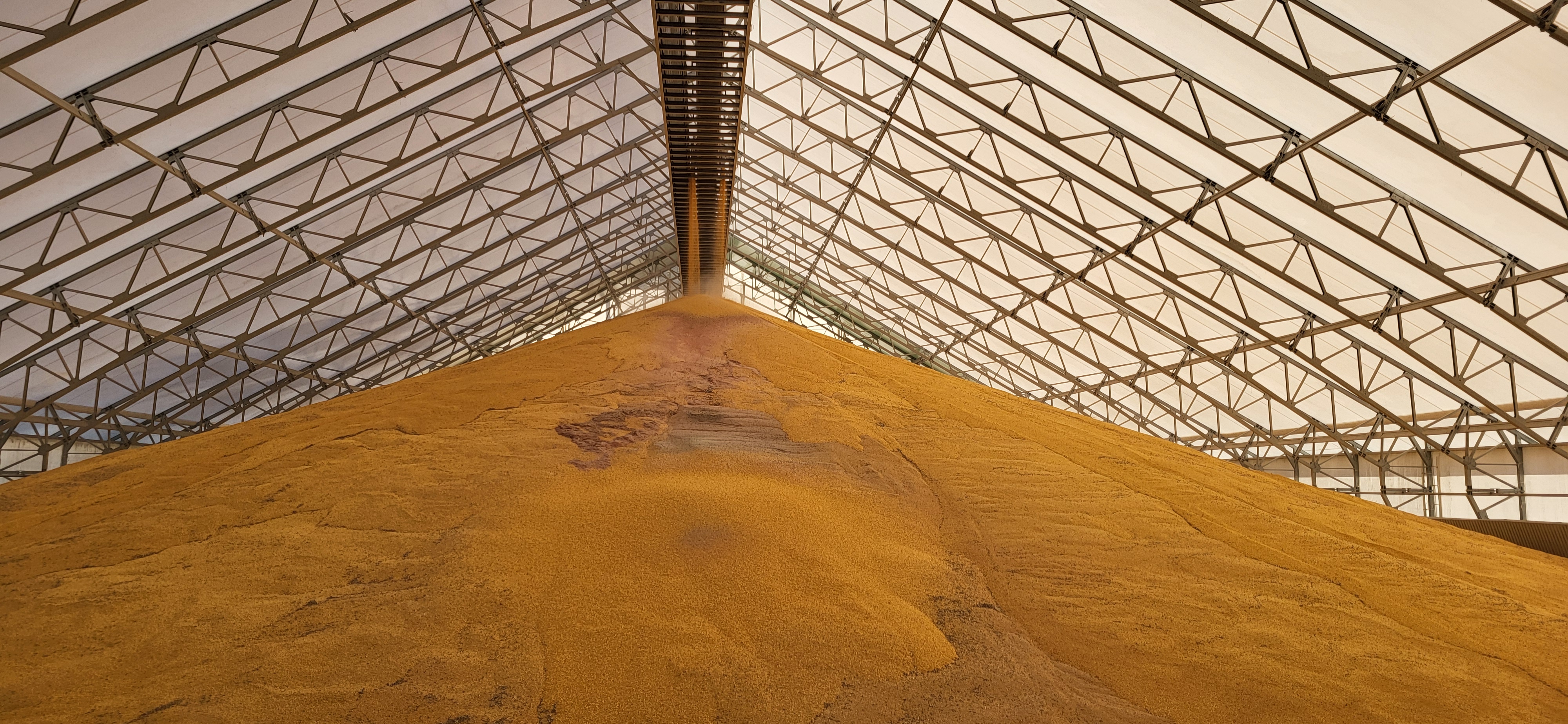
Bulk fertilizer storage is undergoing a rapid transformation. From smarter monitoring systems to innovative building materials like fabric structures, the storage facilities of tomorrow are safer, more efficient, and more sustainable. Below are seven key advances — and how fabric structures play into each one.
1. Real-Time Monitoring & Sensor Integration
Modern bulk fertilizer storage facilities increasingly rely on sensors that monitor temperature, moisture, dust, structural loads, and even chemical composition. According to a market report, the dry-fertilizer storage sector has adopted Internet of Things (IoT) sensors to transition from reactive maintenance to predictive maintenance. These sensors help detect early signs of spoilage, caking, moisture ingress, or structural issues, which is critical for fertilizers that can degrade or react if improperly stored.
Fabric structures have open, column-free interiors that make instrumentation easier, and the translucent membranes allow natural light that helps inspections and visual monitoring. By combining sensor networks with fabric structures, operators can better maintain stable conditions (ventilation, temperature, moisture) and preserve fertilizer quality.
2. Advanced Material Handling & Conveyance Systems
Handling and moving large volumes of fertilizer (granular, powdered, or liquid) demands efficient equipment. Newer systems include high-capacity conveyors, loadout systems, blending towers, and automation of receiving/distribution. Such advances reduce labour, improve safety, and increase output.
Fabric buildings offer very wide, clear-span interiors (with no internal columns) which make it easier to install large conveying equipment, truck or rail load-out bays, and allow heavy machinery movement. This means that when you adopt advanced material-handling systems, coupling them with a fabric structure can reduce layout constraints and improve operational flow.
3. Improved Climate Control & Drying Technologies
Fertilizers are sensitive to moisture, heat, and dust — all of which can degrade quality, cause caking or spoilage, and create safety hazards. One of the emerging technologies noted in the industry is a “moving-bed heat exchanger” to remove heat from stored product, effectively drying and stabilizing fertilizer for better storage.
Precision climate control (via ventilation, sensors, heating/cooling) is becoming standard.
Fabric structures incorporate natural-light membranes and ventilation systems (roof vents, mesh vents in end panels) that support passive and active climate control.
This helps maintain product quality by keeping conditions uniform and mitigating hotspot zones or moisture accumulation.
4. Sustainable & Corrosion-Resistant Materials
Because fertilizers can be corrosive (especially when moisture or chemical reactions occur), storage buildings must be durable and low-maintenance. Advances include corrosion-resistant tank materials (e.g., fiberglass for liquids) and fabric structures with hot-dip galvanized steel frames and engineered membranes.
Also, sustainability demands (including reduced construction waste, recyclability, and reduced footprint) are pushing newer building solutions.
Fabric structures are inherently more material-efficient than traditional steel or concrete buildings—offering lighter weight, quicker installation, and, in many cases, lower embodied carbon. Calhoun Super Structures is proud to further advance this sustainability advantage by exclusively using the first Membrane Structure Fabric in the world to achieve Cradle to Cradle Certified™ status through our fabric partner, NovaShield. To earn certification, products are rigorously assessed for environmental and social performance across five key sustainability categories: material health, material reutilization, renewable energy, water stewardship, and social fairness.
Using fabric structures for bulk fertilizer storage provides long-span coverage, reduced material use, and potentially stronger environmental credentials.
5. Modular & Rapid Deployment Design
The fertilizer industry is under pressure to scale and adapt: seasonal demand, supply chain variation, and the need to protect large volumes of product quickly. Modular storage systems and rapid-deployment structures reduce downtime and cost.
Fabric structures are especially suited to modular/rapid deployment: prefabricated steel frames, membrane covers, large spans, no interior columns, and faster erection times. They can be installed on a variety of foundations and are relocatable and expandable.
For fertilizer storage this means you can scale up or adapt storage quickly (e.g., higher capacity ahead of a seasonal peak) without the long lead times of concrete/steel conventional construction.
6. Enhanced Safety, Dust & Environmental Control
Bulk fertilizer storage carries inherent hazards: dust explosions, moisture reactions, chemical exposure, emissions, and worker safety issues. One of the seven tech advances identified is dust suppression devices.
Also environmental controls, containment systems and regulatory compliance are being upgraded.
Fabric structures offer some advantages for safety and environmental control. Their design enables excellent ventilation, high clear-span interiors (reducing entrapment zones for dust), and natural light (reducing reliance on artificial lighting). Additionally, because they’re lighter weight and faster to construct, you can incorporate specialized ventilation / containment equipment more quickly and cost-effectively.
7. Data-Driven Design & Digital Twin / BIM Integration
Another major transformation is the digitalisation of storage facilities: using Building Information Modeling (BIM), digital twins, structural simulation, load modeling, and integration of sensors/analytics for real-time facility management. In bulk fertilizer storage, this means the building AND the product are being monitored and optimized.
Because fabric buildings often require careful structural analysis (membrane tensioning, snow/wind loads, large clear spans), Calhoun Super Structure already uses an advanced structural analysis tool, 3D Finite Element Analysis. Pairing this design with real-time monitoring of building loads, environmental conditions, and storage levels means the structure becomes part of the “smart storage facility.”
In essence: the fabric building is not just a shell—it becomes an instrumented asset.
When you apply fabric structures to these seven advances, you get a compelling storage solution for bulk fertilizer that checks many boxes:
Speed & flexibility: Fabric structures can be installed quickly, scaled, relocated.
Large clear-span capacity: Great for conveyors, trucks, loaders, blending equipment.
Better climate / environment control: Membranes, ventilation, natural light helps quality preservation.
Sensor & digital readiness: The structure can support IoT, sensors, and monitoring systems.
Cost-effectiveness & sustainability: Lighter materials, less concrete/steel means lower embodied cost and potential environmental benefit.
Safety & operability: Column-free space, good ventilation, design optimized for material handling.
Integration: Fabric structures can be part of a broader “smart facility” (digital twin, BIM, monitoring, data analytics).
If you’re involved in designing or upgrading a bulk fertilizer operation — whether for dry granules, blends, or liquids — then integrating a fabric structure with modern monitoring, handling, and climate control tech is a strategy worth serious consideration.