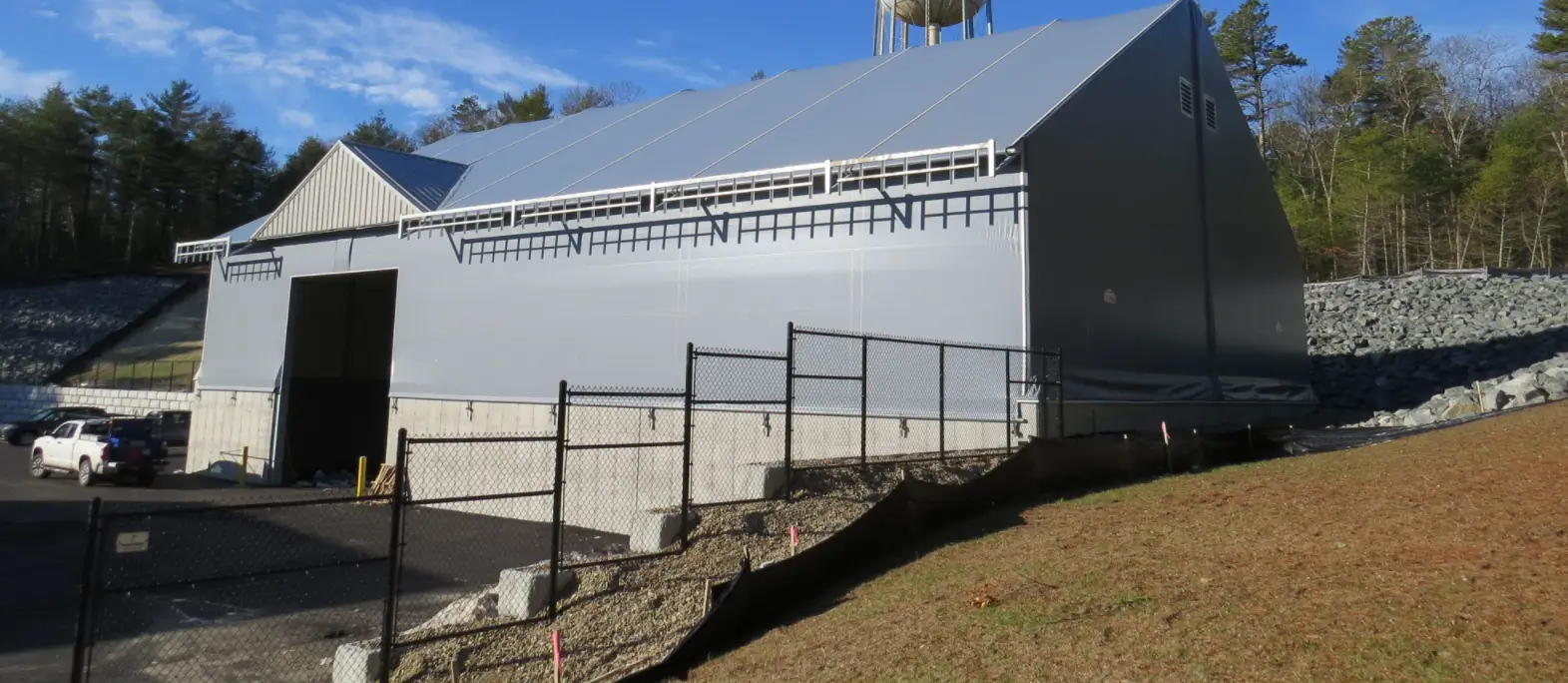
KNOW WHAT TO LOOK FOR
Every design choice conducted by fabric structure manufacturers can affect associated engineering practices and overall fabric structure specifications related to strength and durability. The strength and stability of a tensioned fabric structure depends on both the engineered fabric material and the underlying fabric structure specifications support system. Knowing what to look for and what questions to ask is critical to your investment and overall life-use of your structure.
An open web truss design can push the envelope on a clearspan space, providing options to add extra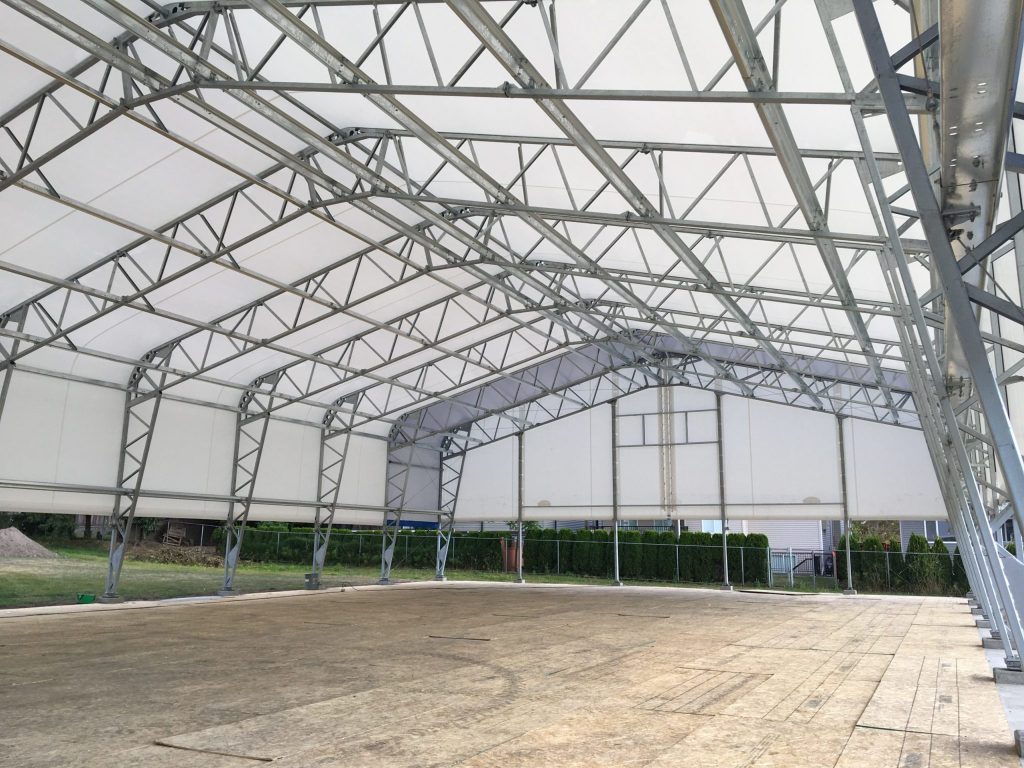 height with custom endwalls and sidewalls.
HVAC and electrical applications can be installed much more quickly with an open web truss design, allowing for a more seamless install which could save you time and money.
Open web trusses are typically more economical than rigid frames or i-beams, and all the surfaces are readily available to be thoroughly hot-dip galvanized.
Calhoun’s fabric structure specifications use open web trusses with a U-channel webbing that gives our frames a wider stance and a more robust connection into the chord; a more effective way of transferring the load between the chords and the web. Our standard building widths range from 16’ wide to 250’ wide.
PRO TIP: Look for square tubing in the open web truss design vs. round tubing. While a round tube shape is often used to resist twisting deformation, the square tubing resists bending and buckling from the moment of inertia stressors since the square tube has more metal stock – and therefore more weight than round – making the square tube truss a stronger, more robust framing system.

Flat plate couplings are fairly common in fabric structure designs and uses a multitude of fasteners to transfer load between truss sections. The problem with flat plate couplings is the amount of parts and pieces required, causing a potentially more compromised joint and a longer completion time. This translates into a higher cost for fabrication.
Calhoun Super Structure has evolved from using a flat plate coupling to an innovative compression coupling. It is located directly on the center line of the chords and uses two fasteners directly in the load path between the chords. This means that our compression coupling very efficiently transfers the load between the chords and adjacent sections of the building, providing a systematic transfer of load between the sections of the truss.
Calhoun’s innovative compression couplers take less time to install due to fewer overall fasteners.
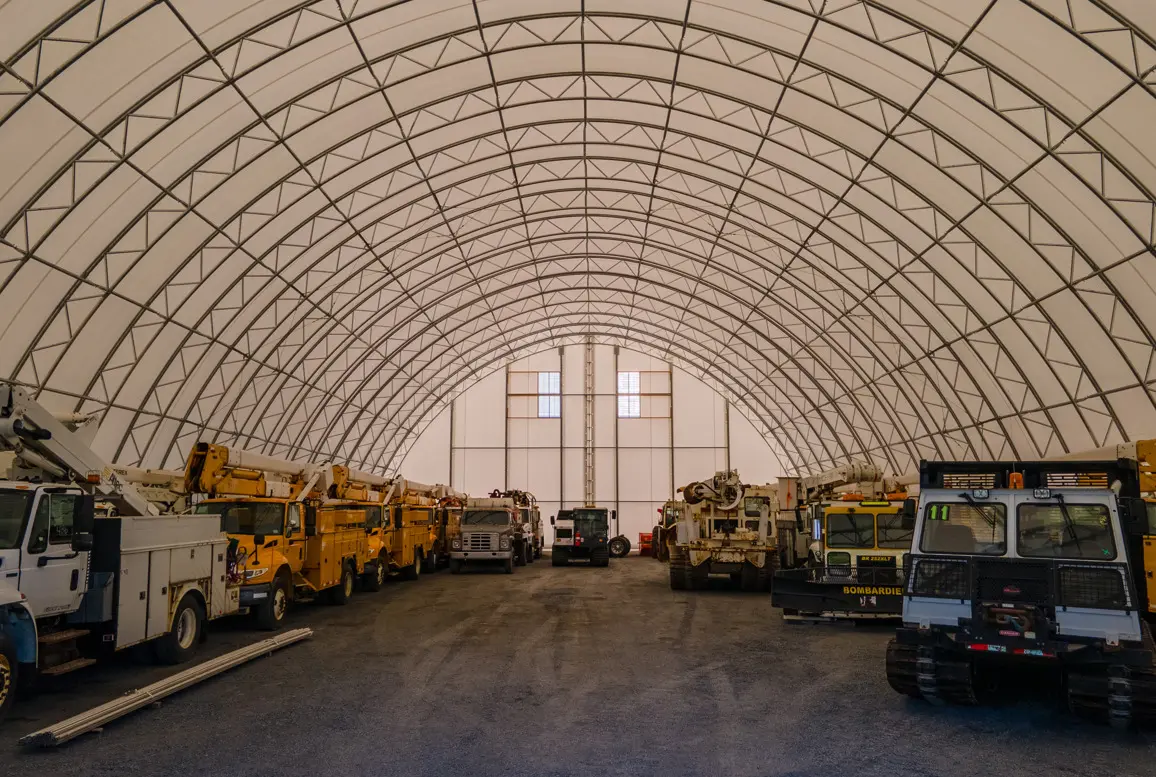
To avoid company bias and ensure strict objectivity of the design work, a fabric structure company should use external, third-party engineers to review all structures.
In-house engineers can be biased towards company influence, timelines, and organizational protocol, which could lead to a lack of thorough evaluation rather than proper due diligence.
Site-specific reviews for standard configurations should be employed and are completed within 1-2 weeks.
If the site-specific review identifies that changes are required, these should be discussed with the customer before the drawings are finalized. The customer is then supplied with engineered stamped drawings for their structure.