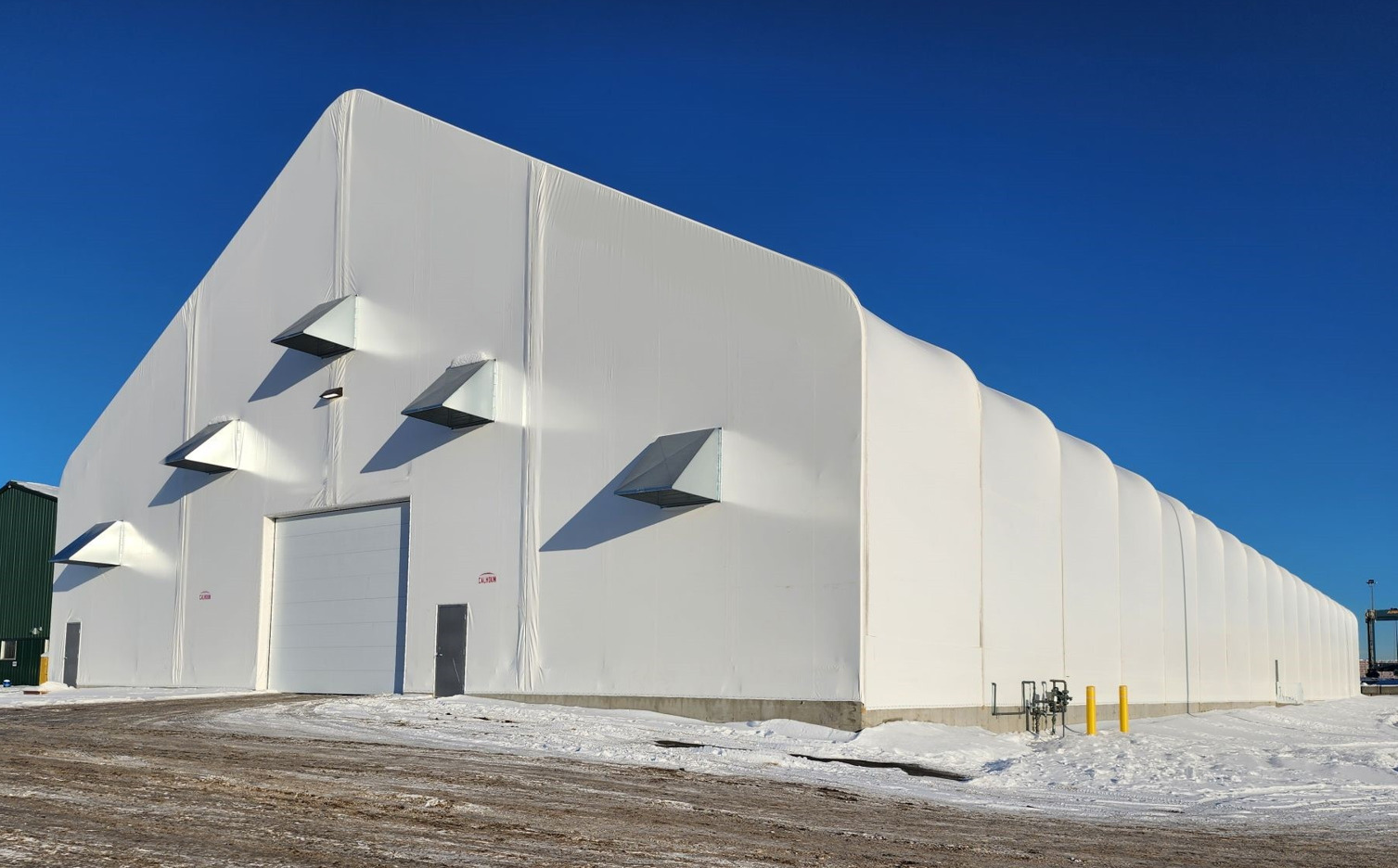
Designing structures to withstand snow loads is a typical engineering challenge complicated by the variability inherent in weather, primarily the impact that wind can have on several design considerations. Not only does wind create forces that the structure has to withstand, but it also can change how snowfall accumulates on the roof – and therefore the design snow load. Many factors affect the estimate of snow load for a structure, and roofed structures not only have to accommodate single snowfall events, but also the accumulation of snow over many snowfall events, often with rainfall included. The classic engineering balancing act determines how much structural support is needed to achieve the reliability required by the building code.
Highly variable weather across North America results in a wide range of snow accumulation levels and patterns. In the coastal zones freeze/thaw cycles are frequent which usually minimizes winter-long accumulations, while the western mountain regions experience the deepest snow accumulations which often last the entire winter. The eastern part of the continent experiences varying winds and snow/rain events, and many areas stay cold enough that this leads to both accumulation and significant snow drifting, as well as ice buildup.
Decades of high-resolution weather data aids the design challenge significantly by making ground-level snowfall and accumulation estimates accurate enough. . The wind has a dramatic influence on the spatial distribution of snow accumulation because in areas of high wind speed the wind carries the snow along and keeps it from falling to the ground. In areas of lower windspeed the snow collects in the air and can fall, forming drifts.
In the absence of wind – perhaps in a deep forest or a protected mountain valley – the snow load on the roof is straightforward to estimate as it is the same as the ground snow load. On the other hand, a structure sited on flat ground without any surface features such as trees or buildings to disrupt the wind or slow it down, the roof snow load estimate can be reduced compared to the no-wind case.
Considering the type of terrain and how it impacts the force of the wind on a structure is not only important for snow accumulation estimates, but also for estimating the structural requirements to withstand the wind load. More complicated than the snow load estimate, wind load design considers the static wind forces on the main structure and the cladding of the structure and is often all that must be considered for low and medium rise buildings. Taller or long-span structures often require a dynamic load calculation that considers resonant effects and other wind-driven forces. In both situations, the impact that the terrain has on the wind also figures prominently into the design calculations.
The factors that go into designing our fabric structures to withstand the snow loads that Mother Nature so carelessly bestows upon us are:
The base roof snow load is estimated using a 1-in-50-year statistic for ground snow load in the area, as is the load of the rain and melt water that accumulates with the snow. Roof slope is a matter simple geometry. The remaining two major factors that go into the design for snow loading account for the influence of the wind. Since the type of terrain upon which the building is sited makes a significant difference as to how the wind impacts the snow load, the Building Code helps designers categorize the terrain. Figure 1 shows the three terrain types categorized by the buildings code in the “exposure factor” using the terms “Open Terrain” and “Rough Terrain” to describe the ends of the spectrum. The code describes Open Terrain to be as rural areas where “the building is exposed on all sides to wind over an open terrain,” and “the area of roof under consideration is exposed to wind on all sides with no significant obstructions on the roof such as parapet walls . . .” Taking the reduction in required snow load also requires that there are no surfaces adjacent to the roof that could cause the accumulation of snow due to drifting.

Figure 1: Yellow highlighting indicates an area of open terrain while red highlighting indicates rough terrain. The mixed terrain is the transition zone between these areas, shown with orange highlighting. (Image license obtained through Envato Elements and granted to Calhoun Super Structure.)
To show how the estimate of terrain arises in the required snow load calculation, take a look at the equation below for the design snow load, S, from the National Building Code of Canada:

where Cw is the wind exposure factor, which is 1 for mixed or rough terrain, but can be 0.75 for open (with caveats outlined above) and as low as 0.5 for “exposed areas north of the treeline.” To see how the site selection for an example structure can impact the design snow load, we can use number from a Calhoun Super Structure example project shown below in Figure 2.
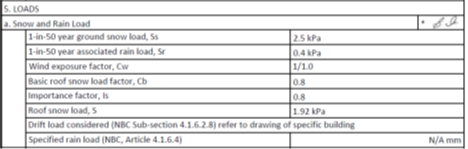
Figure 2: Shown here are sample figures to illustrate the calculation of snow load.
Using the figures above for Mixed or Rough Terrain where Cw is 1 (and Cs and Cα also have the value of 1), we have:

If instead the building were sited in Open Terrain, Cw would have a value of 0.75 and the design snow load would be calculated as:

Comparing these two results illustrates the terrain details of a proposed building site can change the design snow load by as much as 30%, and this can have a significant impact on cost and structure design.