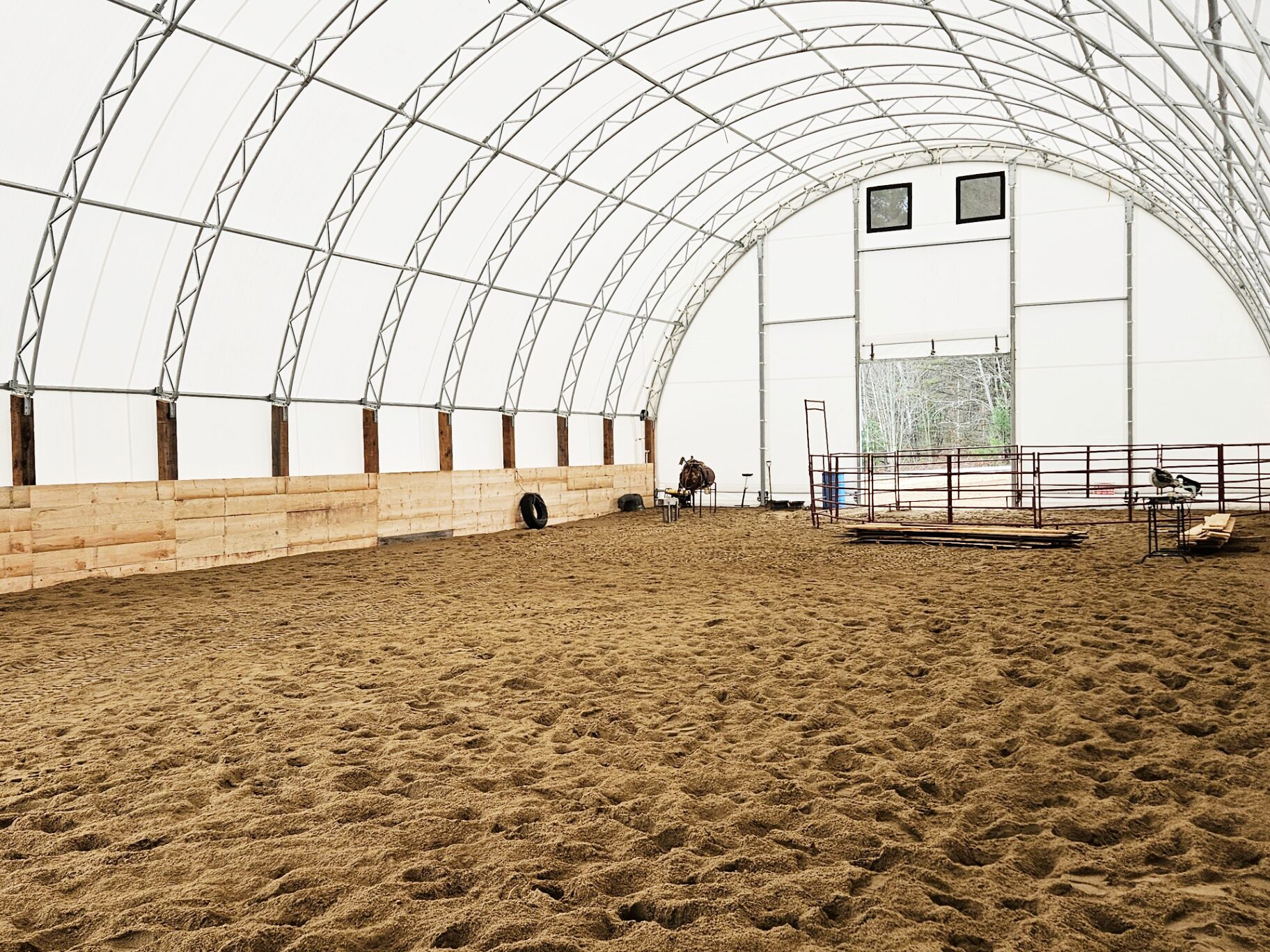
Natural light in fabric structures can do far more than illuminate an interior. Translucent fabric membranes distribute soft, even daylight throughout warehouses, manufacturing facilities, agricultural buildings, livestock shelters, and maintenance spaces. This can improve visibility for daily operations, create a more comfortable workplace, support livestock welfare, and reduce dependence on artificial lighting during daylight hours. The article explains how daylighting works in engineered fabric buildings, explores its benefits for people and animals, and examines how efficient building design can help lower energy use and operating costs
When planning a new building, owners typically evaluate factors such as size, durability, storage capacity, and performance.Natural light in fabric structures adds another layer of value by improving interior visibility, supporting workplace comfort, and enhancing the overall building environment.
The translucent fabric membrane used in engineered fabric structures allows daylight to enter the building and spread throughout the interior. This creates a bright, welcoming space that can support employees, livestock, and daily operations while reducing reliance on artificial lighting during daylight hours.
From warehouses and manufacturing facilities to agricultural and industrial applications, natural daylight offers benefits that extend far beyond simply illuminating a space.
Fabric structures use translucent membranes to bring daylight into the building. Rather than relying solely on windows or overhead fixtures, the building envelope helps distribute natural light throughout the interior.
As sunlight passes through the membrane, it spreads across the space instead of creating concentrated beams of light. This helps reduce harsh shadows and creates more consistent illumination throughout the building.
In large facilities, this can make a noticeable difference. A warehouse, equipment storage building, livestock facility, or maintenance shop often feels brighter and more open when daylight reaches all areas of the interior.
Visibility plays an important role in almost every operation. Employees need to move safely through workspaces, locate materials, inspect equipment, and complete tasks accurately.
Large buildings can experience uneven lighting conditions. Some areas may receive plenty of light, while others depend heavily on artificial fixtures or contain darker corners. These variations can make everyday tasks more challenging.
Natural light in fabric structures helps create a brighter environment with more consistent illumination throughout the building. This supports day-to-day operations across a wide range of applications.
For example:
A well-lit environment helps employees stay aware of their surroundings while supporting efficient operations throughout the day.
The spaces where people work influence how they feel and perform. Bright, naturally lit environments often feel more open and inviting than spaces that rely entirely on artificial lighting.
Employees working in warehouses, manufacturing facilities, and industrial buildings may spend long hours indoors. Access to natural light can help create a more comfortable workplace by bringing daylight into the work environment.
A brighter space may also help reduce eye strain associated with working under artificial lighting for extended periods. While natural light is only one factor that contributes to workplace satisfaction, it can help create an environment where employees feel more comfortable throughout the day.
As organizations continue to compete for skilled labour, creating a positive workplace experience remains an important consideration.
Natural light benefits more than people, it can also support livestock comfort and welfare.
In equine facilities, evenly diffused daylight helps reduce the sharp contrasts and dark shadows often created by traditional lighting systems. Horses rely heavily on their vision to detect potential hazards and can react to sudden changes in brightness, moving shadows, or unfamiliar visual stimuli. Research on equine behaviour shows that horses may hesitate or startle when they encounter dramatic shifts between light and dark because these changes can appear as obstacles or changes in terrain. By creating a bright, evenly illuminated interior, fabric structures can help provide a more consistent visual environment for both horses and handlers. Managing Spooky Horses: Training Tips to Promote Calm Behavior | Mad Barn
For dairy operations, lighting plays an important role in herd management. Research has demonstrated that providing dairy cows with adequate daily light exposure can positively influence milk production. According to the Ontario Ministry of Agriculture, Food and Rural Affairs (OMAFRA), long-day lighting programs have consistently increased milk yield in dairy cattle under the right management conditions.
Whether housing horses, dairy cattle, or other livestock, a bright building environment can support both animal comfort and daily management activities.
Lighting large facilities requires energy. Warehouses, storage buildings, agricultural facilities, and industrial spaces often need extensive lighting systems to maintain visibility throughout the day.
Natural light in fabric structures helps reduce dependence on artificial lighting during daylight hours. Because daylight enters through the membrane and spreads throughout the building, operators may be able to use fewer lights during daytime operations.
The amount of energy saved will vary depending on the building’s size, location, and operating schedule. However, reducing lighting demand can help improve overall efficiency and lower operating costs over time.
In a study for one of Calhoun’s warehouse facilities in the state of New York, the structure earned an exceptional ENERGY STAR® score of 98, meaning it performs more efficiently than 98% of comparable buildings nationwide. This independent benchmark highlights how abundant natural daylight, combined with efficient building design, can dramatically reduce energy consumption while maintaining a bright, productive work environment. View the full report here.
When evaluating a building solution, it’s easy to focus on dimensions, storage capacity, and structural performance. Those factors are important, but the experience inside the building matters too.
Natural light in fabric structures improves visibility, creates a more comfortable work environment, supports livestock welfare, and helps reduce reliance on artificial lighting. Combined with the durability and versatility of engineered fabric structures, these benefits help create buildings that support the people, animals, and operations inside them every day.