A solid, long-lasting fabric structure is an enormous investment for any operation. Most buildings are required to stand up to a lot, from extreme weather to corrosive materials to regular use by occupants or livestock. While traditional buildings made from wood, steel, or concrete are usually what people think of, there’s another option — fabric buildings.
Opting for a fabric structure building can be optimal for many businesses. These durable, easy-to-install structures are useful for temporary or permanent applications across a broad range of industries. Although fabric structure design has roots in ancient societies, modern fabric building architecture is innovative and contemporary in both appearance and function.
Continue reading to learn more about the definition of fabric structures and typical applications, the top benefits of installing a fabric structure and important design considerations.
Fabric structures are structures that consist of a fabric membrane stretched across a structural framework. This framework is typically made of steel or another highly durable metal. The fabric membrane can be made from a variety of different materials, including engineered high-density polyethylene (HDPE), which provides increased protection against wear due to its high strength-to-density ratio.
There are two main types of fabric structures:
Unlike traditional buildings, fabric structures can cover large areas without support beams, which maximizes the clear span, or the floor space between two supports. As a result, fabric structures are highly suitable for functions that require lots of open space, like sports facilities or fertilizer production plants.
Fabric structures are affordable, durable alternatives to traditional buildings. Their high return on investment (ROI) makes them attractive choices for companies, but these buildings offer more benefits than just monetary gain.
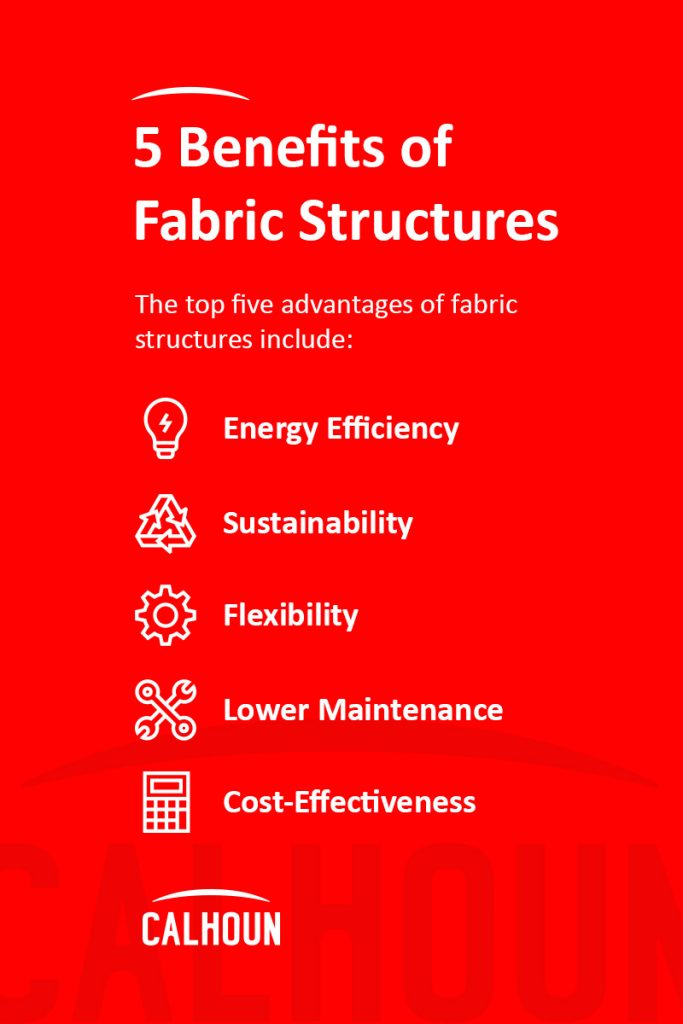
The top five advantages of fabric structures include:
Because fabric structures are typically between 16% to 19% translucent, natural light can easily pass through the membrane, providing suitable illumination for your space. As a result, you only need minimal electrical lighting inside your structure.
Similarly, fabric structures are non-conductive, which means they’re less able to absorb heat. Compared to conductive materials like metal, fabric structures are much cooler in the summer and warmer in the winter, meaning you can save on heating and cooling costs.
In addition to their incredible energy efficiency, fabric structures are often reusable or recyclable at the end of their usable lifespan.
Creating a fabric building requires far less energy consumption and raw materials than other, more conventional structures — such as those made of wood or steel — which means they’re less environmentally harmful to produce.
It’s far easier to add to a fabric structure than to expand a traditional one. That’s part of what makes these buildings so convenient — you can make alterations to your structure any time your operation’s needs change.
Fabric structures are also easily customizable. You can create unique, high-profile designs by changing the fabric color, structure shape, end wall and mount style. Their flexibility also means they can be permanent, temporary or even portable. They’re easy to erect and can be mounted to multiple different foundation types, making them excellent options for seasonal uses, or for businesses that rent their property.
Fabric structures require much less maintenance than their traditional steel and wood counterparts. For example, fabric coverings can go without regular cleaning. On the other hand, most steel buildings require annual washing and painting to keep them looking clean and fresh.
Fabric covers will typically last anywhere from 20-25 years before needing minor repairs. Using high-quality materials like high-density polyethylene fabric or PVC can increase your structure’s ability to withstand damage from severe weather and heavy use.
Additionally, reinforcing materials like hot-dip galvanized (HDG) steel can boost the framework’s ability to weather corrosion and rust. In most cases, internal steel frameworks can last for generations — all you’d need to repair or replace is the fabric cover.
Purchasing and installing a fabric structure costs far less than buying a permanent one. This cost difference is a result of the following factors:
These benefits make fabric structures useful to various industries, from public works to sports to agriculture. Here are some typical uses for fabric structures:

Fabric structures can help optimize your agricultural operations. For one thing, fabric storage facilities are more airtight than conventional structures, allowing for greater protection against moisture and heat loss.
Clearspan hoop barns shield livestock from harsh weather conditions and dangerous predators while still letting in high degrees of natural light, which can boost your operation’s productivity. For example, studies have shown that increased exposure to light can increase a cow’s milk production by 8% to 10%.
Other agricultural uses for fabric structures include:
Building requirements for the mining, oil and gas industry are incredibly rigorous because they need to keep employees and nearby citizens safe. Fabric structures can easily meet these requirements due to the hot-dipped galvanized steel frames and optional fire-retardant fabric.
Other applications within this industry include:
Sports facilities need to be strong and durable to provide athletes and families with necessary safety features due to its high-occupancy use. Calhoun’s open web truss frames easily allow additional lighting, fire prevention systems, and security to be installed without interference. The clear span interior allows athletes to perform without running into support beams or other obstacles.
Additionally, indoor athletic spaces require less maintenance than their outdoor counterparts. For example, both grass and turf fields experience constant wear from exposure to the elements in addition to the usual foot traffic from athletes. By providing a durable cover for your fields, you can reduce the impact of the elements and provide a safe space for sporting fun.
Other uses for fabric structures in sports include:
Fabric structures are an excellent choice for storage applications because they allow for higher clearances and larger widths for less money than more traditional structures. Additionally, because fabric structures rely on fabric tension for support instead of beams and pillars, they allow for more clear span floor space, which means you can store more supplies.
Some common commercial fabric storage structures include:
Event companies can benefit from the flexibility of a fabric structure, as they can quickly erect a temporary tension fabric structure before an event and take it down or relocate it when the space is no longer being used. Additionally, companies can easily customize their venues to create a striking look that pulls the whole setting together.
Here are some examples of event venues using fabric structures:
Waste and recycling facilities require excellent ventilation to keep operations running smoothly. Fabric structures are uniquely suited to this application due to the breathable nature of the material and the ease of installing ventilation systems.
Similarly, sand and salt storage buildings require extra-strong frameworks due to the caustic nature of their contents. By using HDG steel, engineers can craft a building that is highly resistant to rust and corrosion — this process can significantly increase the longevity of your building and reduce maintenance costs.
Other public works applications include:
Customization is a key aspect of the design of fabric structures, and it’s one of the biggest advantages of these buildings. From the buildings’ components to their fabric covering, you can tailor virtually every aspect of your building to suit your operation’s needs.
Standard customization options include:
While many fabric structure companies exist, only a handful will be able to provide the kind of service you need for your operation. Keep the following factors in mind when you’re evaluating which company to go with:
At Calhoun, we’re committed to delivering the highest in structural performance and customer satisfaction. From our first consultation to the final installation and beyond, we strive to create the best structure for your needs — that’s why businesses, public works professionals and retailers across North America trust us to build their structures.
We’re dedicated to getting things right the first time. Many fabric structure manufacturers use standardized computations to guide their design process, but we understand that each site requires a different approach. Our 3D Non-Linear Finite Element Analysis (FEA) software allows us to account for site-specific variables in our designs so we can create a structure that meets your unique size and configuration requirements.
Click here to browse our fabric structures, or contact us today to request a free quote.