The Calhoun Difference
A fabric structure is only as strong as the engineering behind it. Long-term performance depends on far more than the fabric itself; it requires a carefully engineered structural system designed specifically for the conditions of each site.
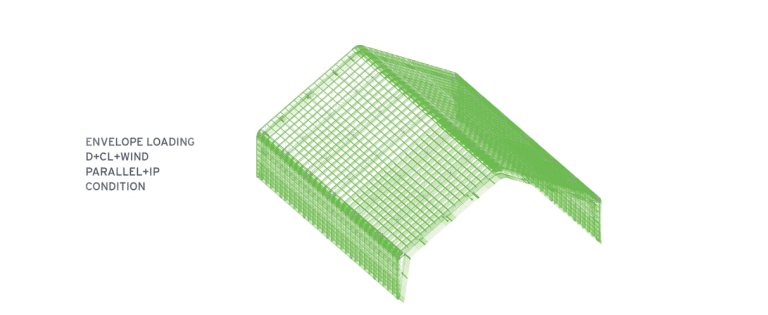
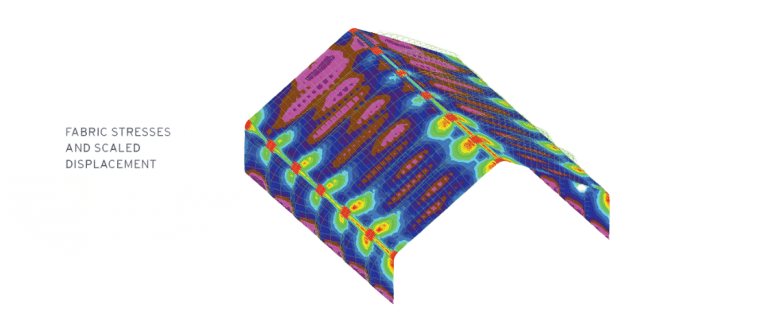
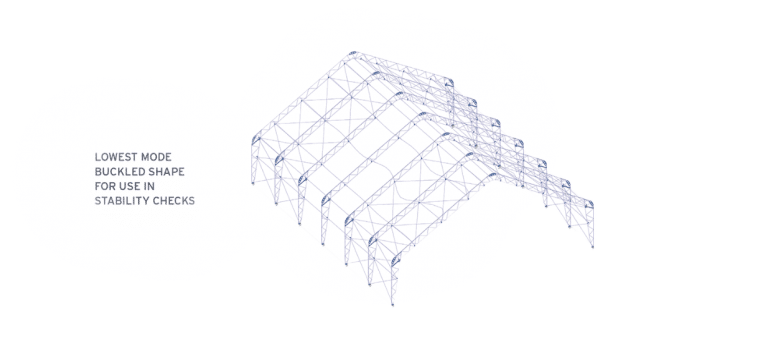
At Calhoun, every fabric structure undergoes a comprehensive site-specific engineering review that considers factors such as location, topography, building orientation, environmental loads, and operational requirements. Using proprietary 3D Nonlinear Finite Element Analysis, our engineers model how the entire structure will respond to real-world conditions, allowing us to optimize structural performance, foundation design, and long-term reliability.
To further ensure quality and safety, all structures are independently reviewed by third-party structural engineers and manufactured under rigorous AWS and CWB certified quality standards. This combination of advanced engineering, independent validation, and controlled manufacturing helps ensure every Calhoun structure is engineered to deliver dependable performance for decades.
The Right Design Starts with the Right Information
Site-specific engineering helps ensure a fabric structure is designed to perform reliably under the unique conditions of its intended location. Before engineering begins, site information such as photos, topography, building orientation, and location data is evaluated to determine the environmental and operational factors that may affect the structure.
Factors Evaluated During Site-Specific Engineering
• Site topography
• Building orientation
• Local environmental loads
• Operational requirements
• Foundation conditions
• Location-specific design parameters
This evaluation allows engineers to validate the proposed building configuration or make adjustments as needed to improve structural reliability, performance, and longevity.
Understanding How the Structure Performs in Real Conditions
3D Nonlinear Finite Element Analysis (FEA) is Calhoun’s proprietary engineering method used to model the true behavior of a fabric structure under real-world loading conditions. Unlike traditional analysis methods, nonlinear analysis accounts for the interaction between the fabric membrane, steel framework, cables, and foundation system.
During every site-specific analysis, a complete 3D model is used to determine accurate load paths throughout the structure and the forces transferred to foundation-resisting elements. This approach helps engineers evaluate how the structure will respond to code-specified snow, wind, and other environmental loads, resulting in a more reliable and efficient design.
Benefits of 3D Nonlinear Analysis
• Models actual fabric behavior under load
• Identifies accurate load paths throughout the structure
• Determines forces acting on foundations
• Establishes cable pretension requirements
• Improves structural reliability
• Supports more economical foundation design
Independent engineering review provides an additional layer of quality assurance and objectivity during the design process. Because structural performance and safety are critical considerations, third-party review helps verify that engineering assumptions, calculations, and design decisions have been properly evaluated.
Calhoun’s fabric structures are reviewed by independent structural engineers to ensure the design work remains objective and free from potential company bias. This process helps validate the structure’s suitability for the site conditions and confirms that applicable engineering requirements have been met.
Foundation performance is directly connected to the structural behavior of the building above it. A comprehensive 3D nonlinear analysis provides engineers with accurate information regarding load paths, foundation reactions, bearing pressures, and concrete stresses, allowing foundation systems to be designed with greater precision.
In some cases, the foundation wall and supporting soil conditions can be modeled directly as part of the overall structural analysis. By accounting for the interaction between the structure and foundation system, engineers can optimize wall thicknesses, reinforcement requirements, and overall foundation design. This approach can lead to significant material efficiencies while improving the reliability of the complete building system.
Fabric structures are engineered to meet the environmental loading requirements of their installation location. Engineers evaluate site-specific factors such as geographic location, building orientation, and applicable building codes to determine the snow, wind, and other environmental loads the structure must withstand. These requirements are incorporated into the structural analysis to ensure reliable performance under expected conditions.
Resources